
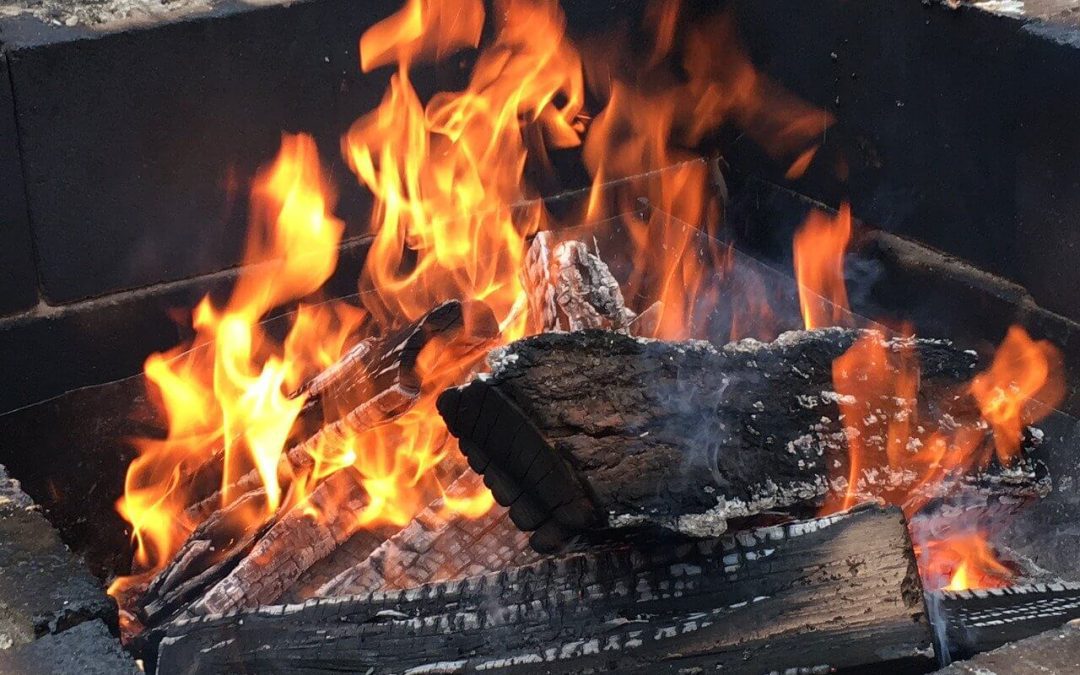
Fire pit safety isn’t about eliminating the fun of an open fire; it’s about understanding the conditions that allow backyard fires to stay enjoyable rather than becoming dangerous. Most backyard fire incidents are entirely preventable with a basic understanding of placement, fuel, management, and extinguishment. The homeowners who get the most out of their fire pits are the ones who’ve thought through safety before they ever light the first fire.
Fire Pit Safety Starts Before You Light the First Match
Placement, surface, and clearance set the baseline for every fire that follows. Fire pits should be placed on a non-combustible surface, rather than directly on a wood deck, composite decking, or grass. A deck fire is one of the most common fire pit-related property damage incidents, typically happening not from a dramatic blaze but from accumulated heat transfer over multiple uses that gradually chars the decking beneath. Even pits marketed as deck-safe should be used with a protective pad rated for the heat output. Clearance from structures, overhangs, low-hanging branches, and fences is the other foundational safety variable. A minimum of ten feet from any structure is the widely cited standard, twenty feet is better when space allows. Overhead clearance matters as much as lateral.
Wind conditions on the day of use are a safety consideration many homeowners overlook. Check wind speed and direction before lighting, and don’t start a fire when sustained winds exceed ten to fifteen miles per hour or when conditions are particularly dry. Dry grass and drought conditions dramatically increase the consequences of an escaped ember.
Wood and Fuel Considerations
Seasoned hardwood is the standard for fire pit use. Seasoned wood has been dried for at least six months, reducing moisture content and producing a cleaner, more controlled burn with less smoke and fewer sparks than green or wet wood. Dry wood ignites reliably and burns at a consistent temperature, making the fire easier to manage. Never burn pressure-treated lumber, painted or stained wood, plywood, or construction waste. These materials release toxic compounds harmful to breathe and leave chemical residues in the ash. Pallets that appear untreated may have been chemically treated or fumigated and should also be avoided. Trash, plastics, and cardboard produce heavy smoke, unpredictable flame behavior, and compounds that shouldn’t be inhaled. Accelerants, such as gasoline, excess lighter fluid, or any flammable liquid, are one of the most common causes of fire pit injuries. A struggling fire needs more kindling or better-positioned wood, not accelerant. Liquid accelerants produce sudden, large flares that could catch clothing, hair, and nearby combustibles instantly.
Fire Pit Safety When the Night Is Over
Extinguishing a fire pit completely is the step most often done partially, and the one that causes property damage after everyone has gone inside. Allow the fire to burn down as much as possible before extinguishing. Spread the remaining embers with a poker to expose them fully, then add water gradually while stirring the ash until no steam or smoke remains. The fire is not out if it’s still steaming. A fire pit that produces no steam when water is added and feels cool to the hand an inch above the surface is fully extinguished. Never leave a fire pit unattended while any combustion is occurring, and never assume a fire has gone out overnight. Wind can reignite embers hours after a fire appears to be out, particularly in dry conditions.
Frequently Asked Questions (FAQs)
How close to my house can I put a fire pit?
The widely recommended minimum clearance is ten feet from any structure, the house, a fence, a shed, or any outbuilding. Twenty feet is a safer target when space allows. Overhead clearance from tree branches and pergola roofing should be at least fifteen to twenty feet. Local ordinances may specify different minimums; check your municipality’s fire code before permanent installation, as some jurisdictions restrict open burning entirely.
Can I use a fire pit on a wood or composite deck?
It’s not recommended without specific precautions. Standard decking could be damaged by sustained heat exposure even without direct flame contact. If using a fire pit on a deck, use a heavy-duty fire-rated protective pad, elevate the pit on legs that create an adequate air gap, and limit fire size. Many fire safety authorities recommend keeping fire pits off decks entirely and placing them on ground-level non-combustible surfaces instead.
What should I do if my fire pit fire gets out of control?
Call 911 immediately if the fire spreads beyond the fire pit area or if you can’t control it quickly. Don’t attempt to fight a fire that has reached nearby vegetation or structures; evacuate and let the fire department handle it. Fire pit safety planning includes knowing in advance where the nearest hose or fire extinguisher is located before you ever light a fire.
Are propane fire pits safer than wood-burning fire pits?
Propane fire pits eliminate several primary wood fire pit safety concerns: no sparks or embers, no smoke, no fuel selection variables, and instant on/off control. They’re generally safer from an ember and spark perspective and permitted in many areas where open wood burning is restricted. They carry their own considerations: the propane tank must be properly connected, leaks checked before lighting, and the fire never lit if there’s any smell of gas.
How do I dispose of fire pit ash safely?
Allow ash to cool completely for at least 48 to 72 hours after the last fire. Transfer cooled ash to a metal container with a tight-fitting metal lid, never a plastic bag or cardboard. Keep the sealed container outside and away from structures for several additional days before disposal. Ash from untreated hardwood can be composted or spread on garden beds in small quantities. Ash from treated or painted wood should be disposed of as household hazardous waste.
Overview Property Inspection offers home inspection services in Edmonton and the surrounding area. Contact us to schedule an appointment today.